
PRODUCTS INFORMATION
PRODUCTS
Engineered Molds for Advanced Casting
ISK’s Casting Mold Solutions
Casting is a manufacturing process in which molten metal such as iron or aluminum is poured into a mold cavity, allowed to cool and solidify, and then removed as a finished product.
There are several casting methods.
At ISK, we primarily manufacture molds for the following casting processes:
Die Casting Mold
Molten aluminum alloy is injected into the mold at high temperature and high pressure.Compared with gravity casting and low pressure casting, die casting offers excellent dimensional accuracy and superior surface finish. It also enables thinner wall sections, contributing to lightweight components, and allows high-volume production in a short cycle time.
However, die casting requires large-scale equipment and facilities for operation.
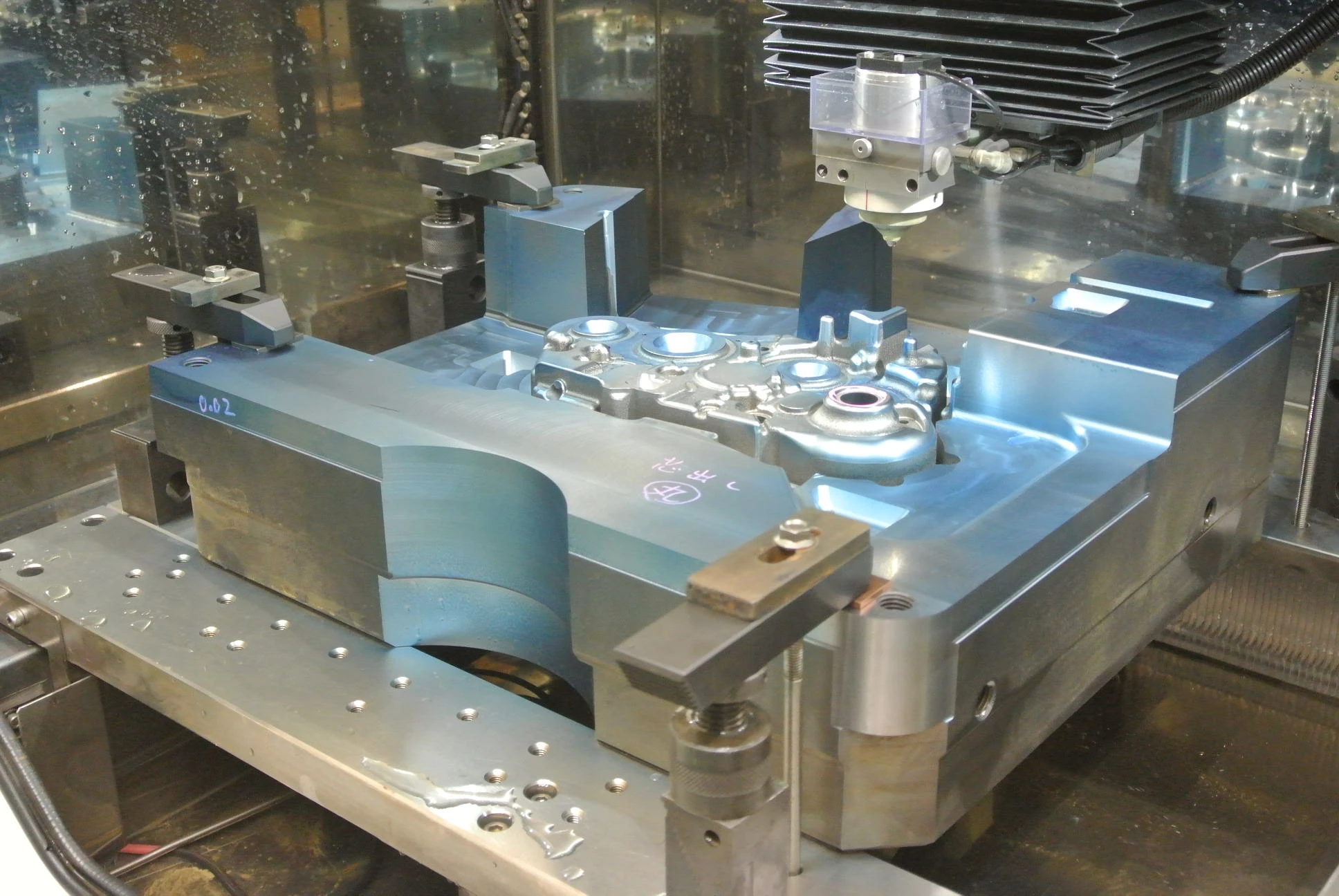
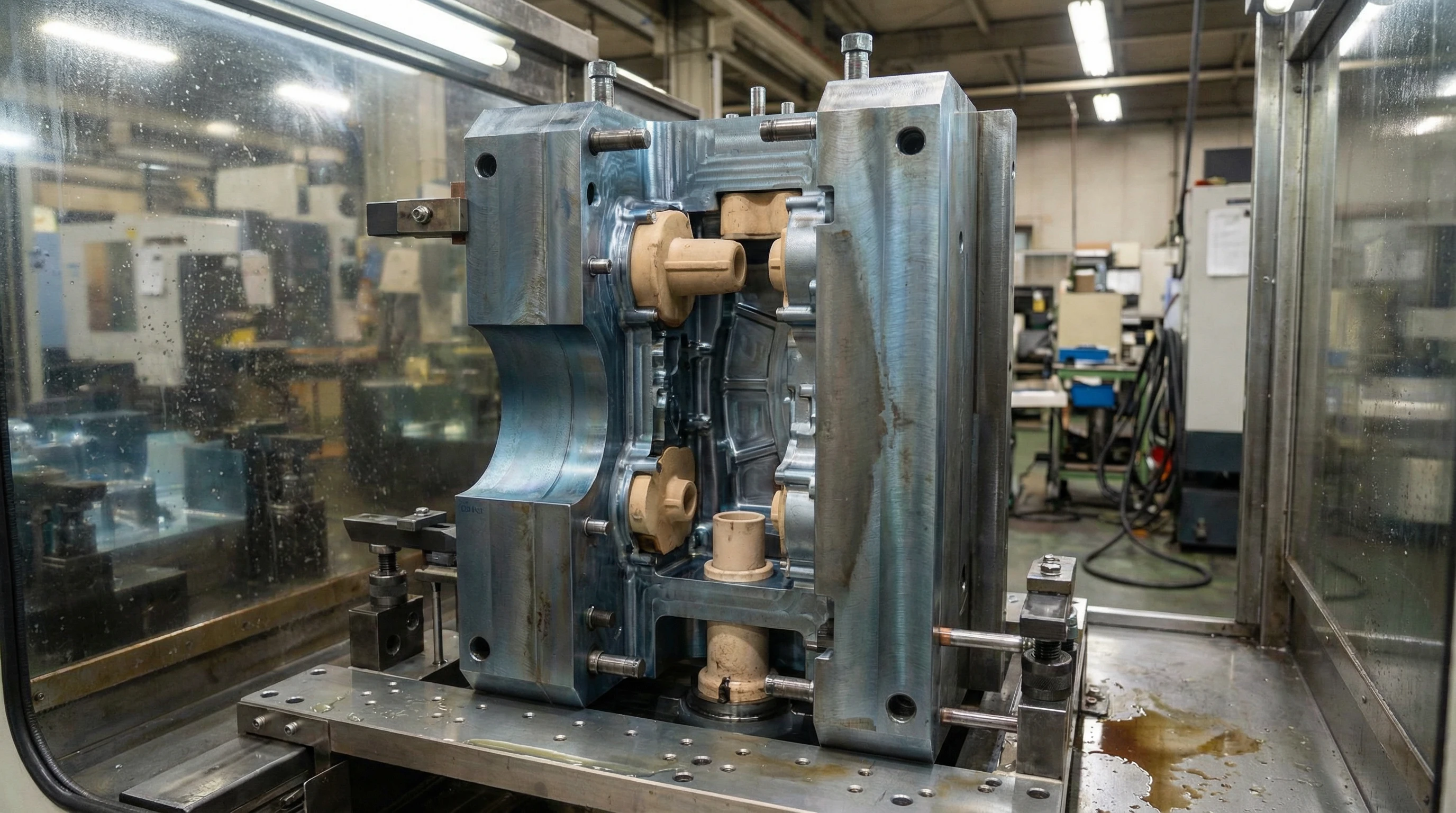
LP Molds (Low Pressure Casting)
In this method, low pressure is applied to the molten metal surface inside a sealed container, forcing the metal upward into the mold cavity against gravity.When products require internal cavities, cores are used. These hollow or undercut geometries are often complex and technically demanding.
By using cores, LP molds can produce components with intricate hollow structures and undercuts. Because the molten metal flows gently during the process, low pressure casting produces dense castings with fewer defects. However, production speed is lower than die casting and gravity casting.
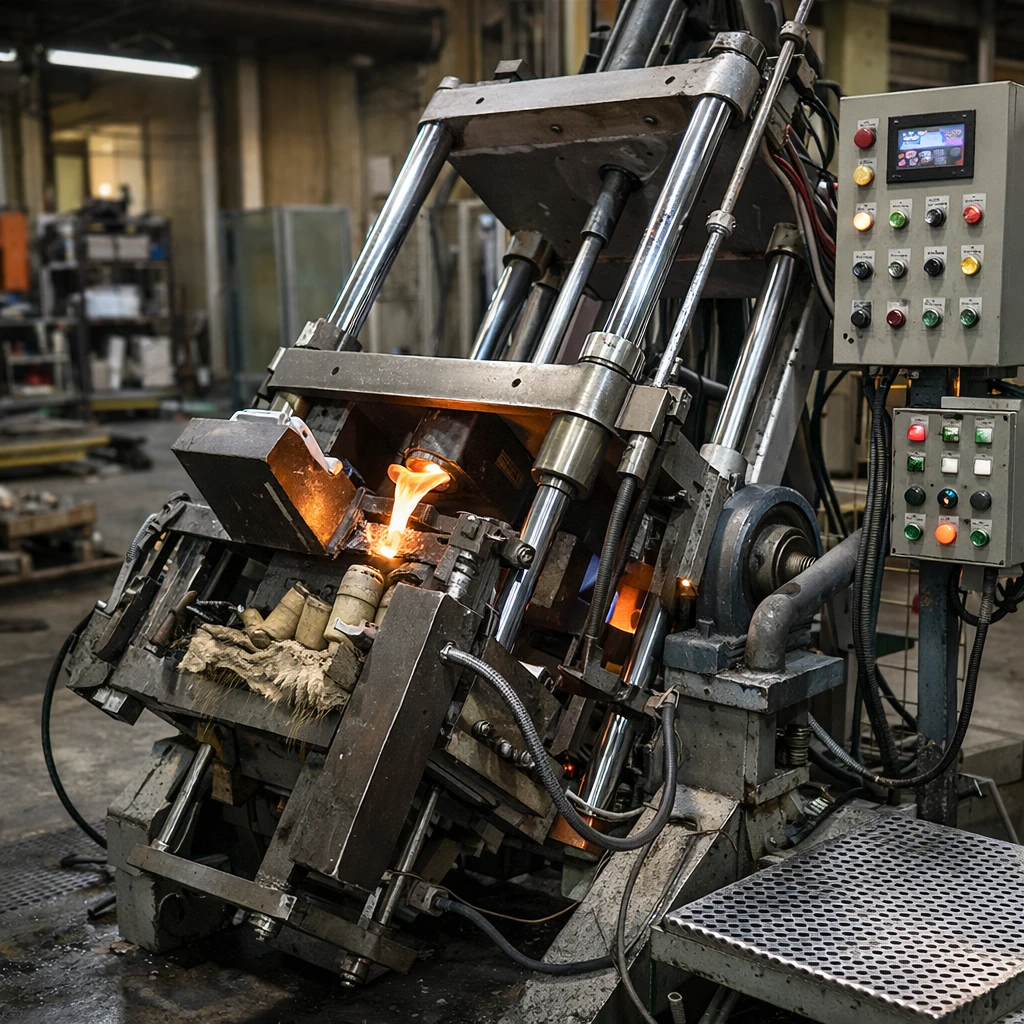
GD Type (Gravity Casting)
Gravity casting is a method in which molten metal is poured into the mold cavity solely by gravitational force.
By using cores, this method can also produce hollow shapes and complex geometries including undercuts.
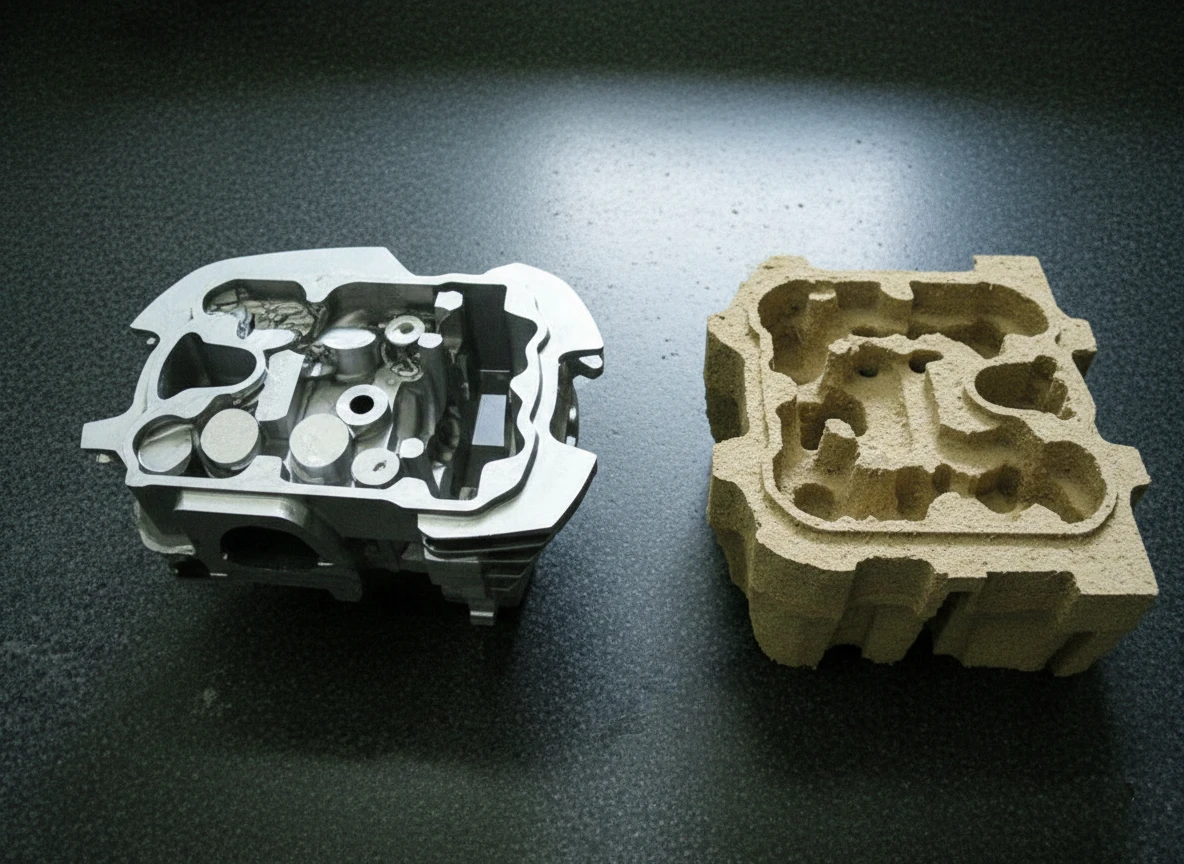
Shell Molds (Shell Core Forming)
Shell molds are used to produce cores for gravity casting and low pressure casting.
By utilizing shell cores, it becomes possible to manufacture products with hollow structures and complex undercut geometries.